What YFC is Doing
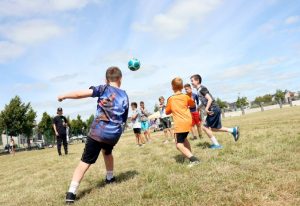
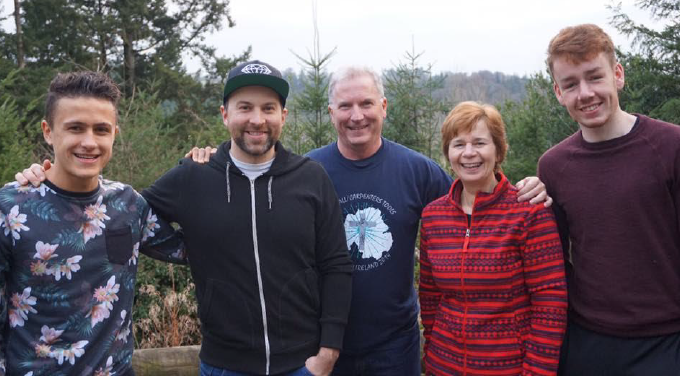
One of YFC’s pioneer programs, that is, where ministry to the youth has recently begun, Ireland YFC is excitedly and prayerfully moving forward. It is focusing on building relationships with churches, recruiting staff and volunteers and registering with the government.
Prayer Needs
- Guidance as contacts are made and relationships built.
- Open doors for ministry, volunteers and potential staff.
About Ireland
Ireland
Introduction
Celtic tribes arrived on the island between 600-150 B.C. Invasions by Norsemen that began in the late 8th century were finally ended when King Brian BORU defeated the Danes in 1014. English invasions began in the 12th century and set off more than seven centuries of Anglo-Irish struggle marked by fierce rebellions and harsh repressions. A failed 1916 Easter Monday Rebellion touched off several years of guerrilla warfare that in 1921 resulted in independence from the UK for 26 southern counties; six northern (Ulster) counties remained part of the UK. In 1949, Ireland withdrew from the British Commonwealth; it joined the European Community in 1973. Irish governments have sought the peaceful unification of Ireland and have cooperated with Britain against terrorist groups. A peace settlement for Northern Ireland is gradually being implemented despite some difficulties. In 2006, the Irish and British governments developed and began to implement the St. Andrews Agreement, building on the Good Friday Agreement approved in 1998.
Geography
Location
Location: Western Europe, occupying five-sixths of the island of Ireland in the North Atlantic Ocean, west of Great Britain
Geographic Coordinates: 53 00 N, 8 00 W
Area
Total Area: 70,273 sq km Rank: 119
Land Area: 68,883 sq km
Water Area: 1,390 sq km
Comparison: slightly larger than West Virginia
Land Boundaries: 360 km
Bordering Countries: UK 360 km
Coastline: 1,448 km
Climate
temperate maritime; modified by North Atlantic Current; mild winters, cool summers; consistently humid; overcast about half the time
Terrain
mostly level to rolling interior plain surrounded by rugged hills and low mountains; sea cliffs on west coast
Elevations
Lowest Point: Atlantic Ocean 0 m
Highest Point: Carrauntoohil 1,041 m
Natural Resources
natural gas, peat, copper, lead, zinc, silver, barite, gypsum, limestone, dolomite
Land Use
Arable land: 16.82%
Permanent Crops: 0.03%
Other: 83.15% (2005)
Irrigated Land: NA
Renewable Water Resources: 46.8 cu km (2003)
Total Freshwater withdrawal (domestic/industrial/agricultural): 1.18 cu km/yr (23%/77%/0%)
Freshwater Withdrawal Per Capita: 284 cu m/yr (1994)
Environment
Natural Hazards: NA
Environmental Issues: water pollution, especially of lakes, from agricultural runoff
Environmental Agreements: Party to: Air Pollution, Air Pollution-Nitrogen Oxides, Air Pollution-Sulfur 94, Biodiversity, Climate Change, Climate Change-Kyoto Protocol, Desertification, Endangered Species, Environmental Modification, Hazardous Wastes, Law of the Sea, Marine Dumping, Ozone Layer Protection, Ship Pollution, Tropical Timber 83, Tropical Timber 94, Wetlands, Whaling
Geography Notes
strategic location on major air and sea routes between North America and northern Europe; over 40% of the population resides within 100 km of Dublin
People
Population: 4,203,200 (July 2010 est.) Rank: 125
Age Structure
0-14 years: 20.9% (male 454,571/female 424,022)
15-64 years: 67.1% (male 1,411,336/female 1,409,760)
65 years and over: 12% (male 224,850/female 278,661) (2010 est.)
Median Age: 34.1 years
Population Growth
Growth Rate: 1.12% (2010 est.) Rank: 122
Birth Rate: 14.23 births/1,000 population (2010 est.) Rank: 148
Death Rate: 7.75 deaths/1,000 population (July 2010 est.) Rank: 112
Net Migration Rate: 4.71 migrant(s)/1,000 population (2010 est.) Rank: 22
Urbanization
Urban Population: 61% of total population (2008)
Rate of Urbanization: 2.2% annual rate of change (2005-10 est.)
Life and Death
Infant Mortality Rate: 5.05 deaths/1,000 live births Rank: 189
Life Expectancy at Birth: 78.24 years Rank: 46
Fertility Rate: 1.85 children born/woman (2010 est.) Rank: 155
Health and Disease
HIV/AIDS - Adult Prevalence Rate: 0.2% (2007 est.) Rank: 101
People living with HIV/AIDS: 5,500 (2007 est.) Rank: 121
HIV/AIDS Deaths: fewer than 100 (2007 est.) Rank: 142
Nationality and Culture
Noun: Irishman(men), Irishwoman(women), Irish (collective plural)
Adjective: Irish
Ethnic Groups: Irish 87.4%, other white 7.5%, Asian 1.3%, black 1.1%, mixed 1.1%, unspecified 1.6% (2006 census)
Religion: Roman Catholic 87.4%, Church of Ireland 2.9%, other Christian 1.9%, other 2.1%, unspecified 1.5%, none 4.2% (2006 census)
Languages: English (official) is the language generally used, Irish (Gaelic or Gaeilge) (official) spoken mainly in areas along the western coast
Education
Literacy (Meaning, age 15 and over can read and write): 99% Male: 99% Female: 99% (2003 est.)
School life expectancy (primary to tertiary education): 18 years Male: 17 years Female: 18 years (2006)
Education expenditures: 4.7% of GDP (2005) Rank: 80
Government
Country Name
Conventional Long Form: none
Conventional Short Form: Ireland
Local Long Form: none
Local Short Form: Eire
Government Type: republic, parliamentary democracy
Capital: Dublin Geographic Coordinates: 53 19 N, 6 14 W
Administrative divisions
29 counties and 5 cities*; Carlow, Cavan, Clare, Cork, Cork*, Donegal, Dublin*, Dun Laoghaire-Rathdown, Fingal, Galway, Galway*, Kerry, Kildare, Kilkenny, Laois, Leitrim, Limerick, Limerick*, Longford, Louth, Mayo, Meath, Monaghan, North Tipperary, Offaly, Roscommon, Sligo, South Dublin, South Tipperary, Waterford, Waterford*, Westmeath, Wexford, Wicklow
Independence: 6 December 1921 (from the UK by treaty)
National holiday: Saint Patrick's Day, 17 March
Constitution: adopted 1 July 1937 by plebiscite; effective 29 December 1937
Legal system: based on English common law substantially modified by indigenous concepts; judicial review of legislative acts in Supreme Court; has not accepted compulsory ICJ jurisdiction
Suffrage: 18 years of age; universal
Executive Branch
Chief of State: President Mary MCALEESE (since 11 November 1997)
Head of Government: Taoiseach (Prime Minister) Brian COWEN (since 7 May 2008)
Cabinet: Cabinet appointed by the president with previous nomination by the prime minister and approval of the House of Representatives
Elections: president elected by popular vote for a seven-year term (eligible for a second term); election last held on 31 October 1997 (next scheduled for October 2011); note - Mary MCALEESE was appointed to a second term when no other candidate qualified for the 2004 presidential election; prime minister (taoiseach) nominated by the House of Representatives and appointed by the president
Election Results: Mary MCALEESE elected president; percent of vote - Mary MCALEESE 44.8%, Mary BANOTTI 29.6%
Legislative Branch
bicameral Parliament or Oireachtas consists of the Senate or Seanad Eireann (60 seats; 49 members elected by the universities and from candidates put forward by five vocational panels, 11 are nominated by the prime minister; members serve five-year terms) and the House of Representatives or Dail Eireann (166 seats; members elected by popular vote on the basis of proportional representation to serve five-year terms)
Elections: Senate - last held in July 2007 (next to be held by July 2012); House of Representatives - last held on 24 May 2007 (next to be held by May 2012)
Election Results: Senate - percent of vote by party - NA; seats by party - Fianna Fail 28, Fine Gael 14, Labor Party 6, Progressive Democrats 2, Green Party 2, Sein Fein 1, independents 7; House of Representatives - percent of vote by party - Fianna Fail 41.6%, Fine Gael 27.3%, Labor Party 10.1%, Sinn Fein 6.9%, Green Party 4.7%, Progressive Democrats 2.7%, other 6.7%; seats by party - Fianna Fail 78, Fine Gael 51, Labor Party 20, Sinn Fein 4, Green Party 6, Progressive Democrats 2, independents 4, Speaker of the Dail 1
Note: on 8 November 2008, delegates voted to disband the Progressive Democrats, and in November 2009 it officially stopped operating as a political party
Judicial branch
Supreme Court (judges appointed by the president on the advice of the prime minister and cabinet)
Politics
Political Parties and Leaders: Fianna Fail [Brian COWEN]; Fine Gael [Enda KENNY]; Green Party [John GORMLEY]; Labor Party [Eamon GILMORE]; Progressive Democrats or PD [Noel GREALISH] (formerly dissolved on 20 November 2009); Sinn Fein [Gerry ADAMS]; Socialist Party [Joe HIGGINS]; The Workers' Party [Michael FINNEGAN]
Political Pressure Groups and Leaders: Families Acting for Innocent Relatives or FAIR [Brian MCCONNELL] (seek compensation for victims of violence); Families Against Intimidation and Terror or FAIT (oppose terrorism); Gaeltacht Civil Rights Campaign (Coiste Cearta Sibhialta na Gaeilge) or CCSG (encourages the use of the Irish language and campaigns for greater civil rights in Irish speaking areas); Iona Institute [David QUINN] (a conservative Catholic think tank); Irish Anti-War Movement [Richard Boyd BARRETT] (campaigns against wars around the world); Irish Republican Army or IRA (terrorist group); Keep Ireland Open (environmental group); Midland Railway Action Group or MRAG [Willie ALLEN] (transportation promoters); Peace and Neutrality Alliance [Roger COLE] (campaigns to protect Irish neutrality); Rail Users Ireland (formerly the Platform 11 - transportation promoters); 32 Country Sovereignty Movement or 32CSM (supports a fully sovereign Ireland); Ulster Defence Association or UDA (terrorist group)
International Organization Participation: ADB (nonregional member), Australia Group, BIS, CE, EAPC, EBRD, EIB, EMU, ESA, EU, FAO, FATF, IAEA, IBRD, ICAO, ICC, ICCt, ICRM, IDA, IEA, IFAD, IFC, IFRCS, IHO, ILO, IMF, IMO, Interpol, IOC, IOM, IPU, ISO, ITSO, ITU, ITUC, MIGA, MINURCAT, MINURSO, MONUC, NEA, NSG, OAS (observer), OECD, OPCW, OSCE, Paris Club, PCA, PFP, UN, UNCTAD, UNESCO, UNHCR, UNIDO, UNIFIL, UNMIL, UNOCI, UNTSO, UPU, WCO, WFTU, WHO, WIPO, WMO, WTO, ZC
Flag Description: three equal vertical bands of green (hoist side), white, and orange; officially the flag colors have no meaning, but a common interpretation is that the green represents the Irish nationalist (Gaelic) tradition of Ireland; orange represents the Orange tradition (minority supporters of William of Orange); white symbolizes peace (or a lasting truce) between the green and the orange
Note: similar to the flag of Cote d'Ivoire, which is shorter and has the colors reversed - orange (hoist side), white, and green; also similar to the flag of Italy, which is shorter and has colors of green (hoist side), white, and red
Economy
Economy Overview: Ireland is a small, modern, trade-dependent economy. Ireland joined 11 other EU nations in circulating the euro on 1 January 2002. GDP growth averaged 6% in 1995-2007, but economic activity dropped sharply in 2008-09 as GDP fell by 3% in 2008 and nearly 8% in 2009. Ireland entered into a recession for the first time in more than a decade with the onset of the world financial crisis and subsequent severe slowdown in the property and construction markets. Agriculture, once the most important sector, is now dwarfed by industry and services. Although the export sector, dominated by foreign multinationals, remains a key component of Ireland's economy, construction most recently fueled economic growth along with strong consumer spending and business investment. Property prices rose more rapidly in Ireland in the decade up to 2007 than in any other developed economy. However, average home prices have fallen 50% from the 2007 peak. In 2008 the COWEN government moved to guarantee all bank deposits, recapitalize the banking system, and establish partly-public venture capital funds in response to the country's economic downturn. In 2009, in an effort to stabilize the banking sector, the Irish Government announced the establishment of the National Asset Management Agency (NAMA), which will acquire property and development loans with a book value of more than $100 billion from Irish banks. Faced with a need to bring the budget deficit down under the 3% EMU limit by 2014, the Irish Government introduced the first in a series of draconian budgets in 2009. In addition to across-the-board cuts in spending, the 2009 budget included wage reductions for all public servants.
Gross Domestic Product
GDP (purchasing power parity): $172.5 billion (2009 est.) Rank: 57
GDP - real growth rate: -7.6% (2009 est.) Rank: 202
GDP - per capita (PPP): $41,000 (2009 est.) Rank: 18
GDP - Composition by Sector: Agriculture: 5% Industry: 46% Services: 49% (2002 est.)
Labor Force
Labor Force: 2.187 million (2009 est.) Rank: 116
Labor force - by occupation: Agriculture: 6% Industry: 27% Services: 67% (2006 est.)
Unemployment Rate: 11.8% (2009 est.) Rank: 129
Poverty
Population below poverty line: 4.2% (2008 est.)
$151.5 billion (31 December 2008 est.)
Transnational Issues
International Disputes: Ireland, Iceland, and the UK dispute Denmark's claim that the Faroe Islands' continental shelf extends beyond 200 nm